🧪 AI in pharma and the architecture that supports the license to operate
Imagine a meeting where an AI that detects adverse reactions is presented, but the project stalls over the question of whether the team can demonstrate to the regulator what data the model saw and how the process was validated in the past. If the answer to that question is technical silence, then the solution is not an asset for the firm but an operational risk that compromises the license to operate.
Reliable AI adoption in pharma depends less on model power and much more on an architecture oriented toward evidence and technical compliance.
What it is and how to implement
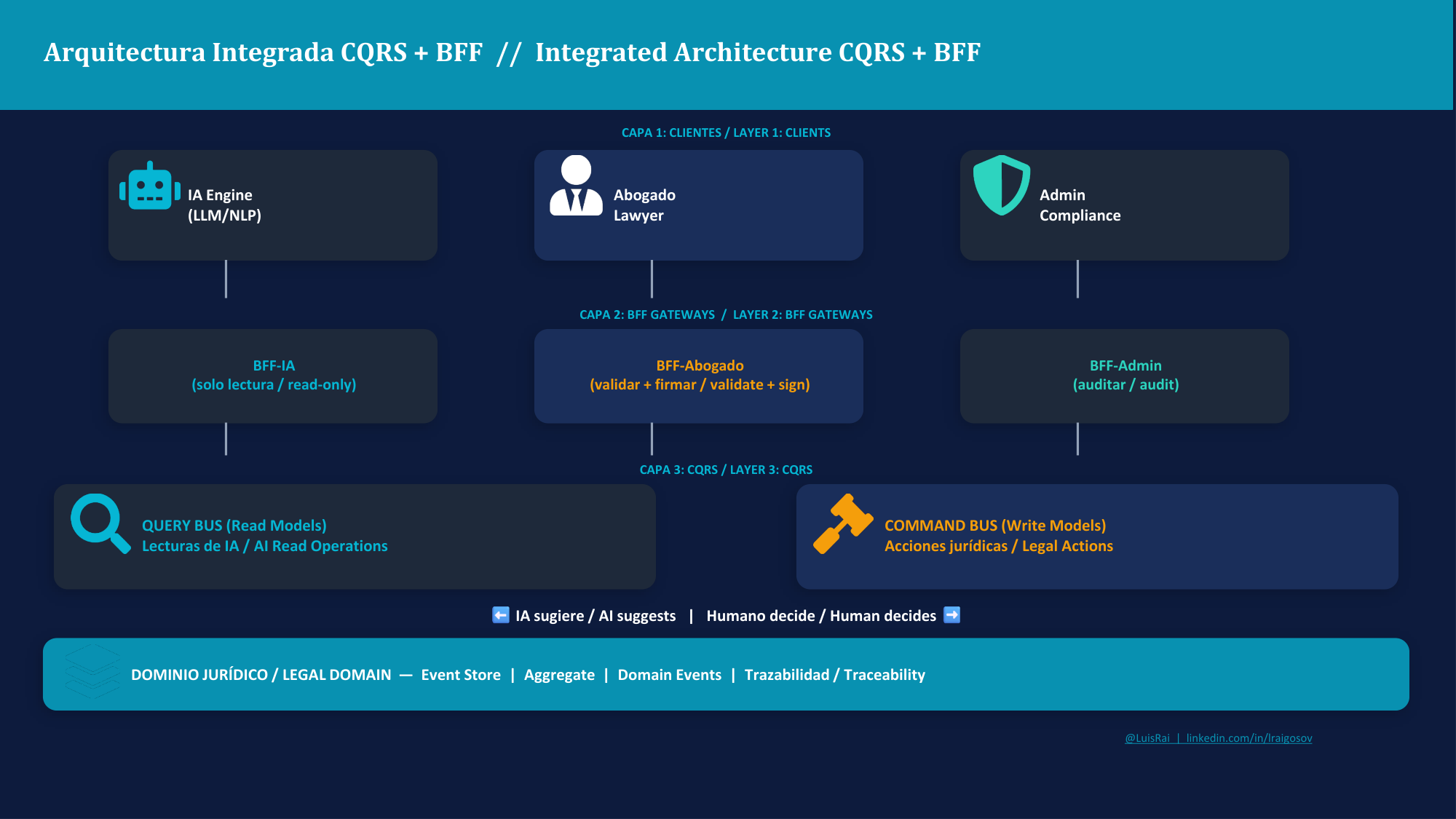
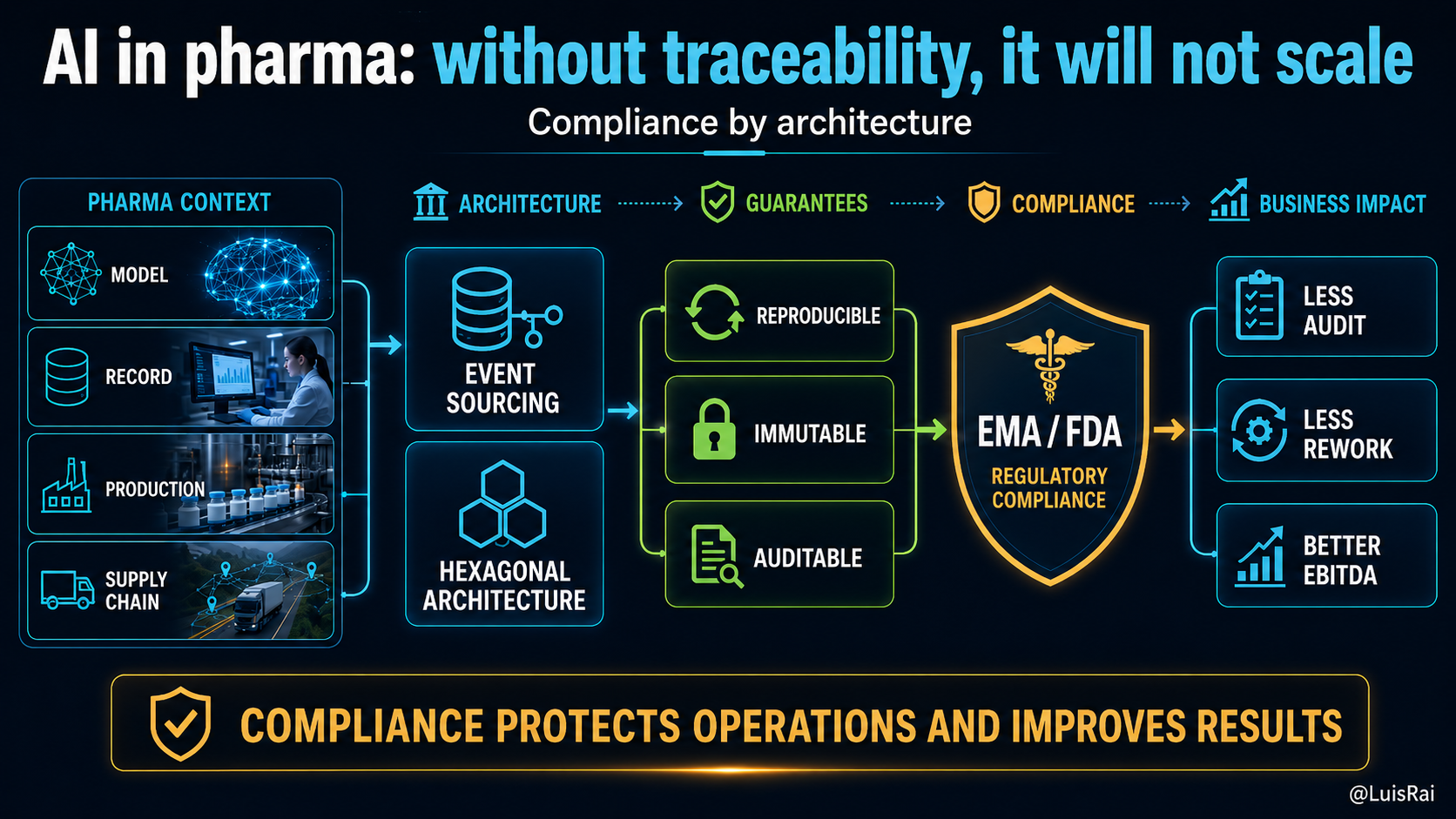
In this sector, regulations require every decision to be reproducible and immutable, which means designing solutions with patterns such as Event Sourcing, where each state change is recorded as an unalterable event that allows the operation to be reconstructed with forensic precision. The path toward responsible AI starts by defining the traceability contract before selecting any tool, identifying the critical points where the model impacts safety, and designing persistence that seals every input and output with timestamps. Finally, Hexagonal Architecture isolates the compliance core, ensuring the system remains auditable without depending on black-box opacity or cloud provider changes.
Impact on ROI and EBITDA
Financial benefit comes from mitigating risk and gaining efficiency in quality processes, as the return on investment is visible in reduced audit preparation time. For EBITDA, operational stability and sanction prevention protect company margins, ensuring each technological advance is safe under the most demanding standards. An auditable architecture reduces technical debt and allows innovation to be a real support for sustained business growth in regulated environments where evidence is non-negotiable.
EMA and FDA reinforced that the utility of a system depends on its capacity to be reproduced. Designing without these controls is equivalent to building on sand and expecting the inspector not to notice structural failures when evaluating the license to operate.
Define what technical evidence you need to pass an inspection, build the immutable audit trail that generates it by design, and protect the logic with decoupled architecture. Let AI operate on a solid foundation that does not put the firm's viability at risk.
References and Related Readings
- EMA (2024). Reflection paper on the use of artificial intelligence in the medicinal product lifecycle
- FDA (2025). Artificial Intelligence and Machine Learning Software as a Medical Device