
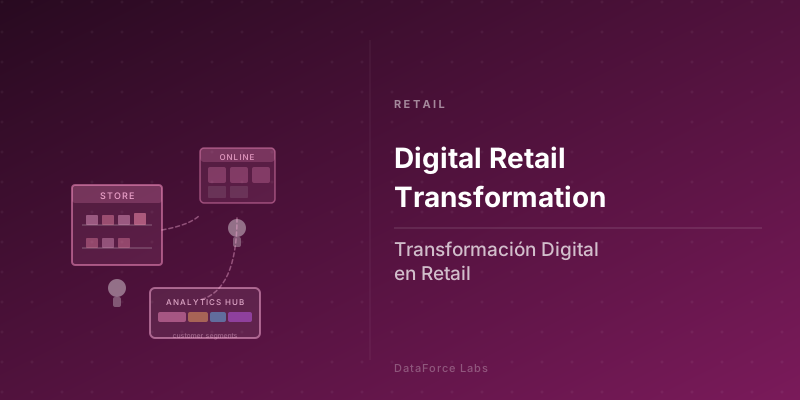
Omnichannel retail does not mean showing the same catalog in a store and an application. It means pricing, availability, customer identity, orders, and returns preserve the same meaning when an interaction changes channels.
The Problem Does Not Start With the Recommendation
A recommendation can be accurate and still create a poor experience if it offers an unavailable product, applies an expired price, or ignores a return made in a store. Before personalization, the platform needs a coherent view of products, locations, available stock, promotions, and order status.
The unit of design should be the complete journey. A customer may research on the web, reserve on mobile, pay in a store, receive at home, and return at another location. If every channel creates its own identifiers, the company observes five transactions where the person experienced one journey.
Domains That Need Data Contracts
- Customer: identity, consent, preferences, and profile unification rules.
- Product: SKU, variants, attributes, category, and commercial validity.
- Pricing and promotion: channel, location, period, conditions, and precedence when rules overlap.
- Inventory: physical stock, reservations, available units, and update time.
- Order: lines, payments, fulfillment, status changes, and delivery promise.
- Return: received product, reason, condition, refund, and inventory effect.
Each domain can evolve independently, but it must publish compatible events and definitions. A price change or inventory reservation cannot depend on another system checking hours later.
Use Cases That Depend on This Foundation
Basket analysis needs consistent products and orders. Demand prediction must distinguish sales, reservations, cancellations, and returns. Personalization needs consent and unified identity. Fraud prevention must connect device, payment, order, and behavior without turning correlation into an automatic accusation.
This changes the investment order: contracts, quality, and events first; models, campaigns, and dashboards afterward.
Metrics That Must Not Change Between Channels
- Promised availability: units that can actually be reserved for the channel and location.
- Conversion: a session or visit ending in a confirmed order, with an explicit rule for cancellations.
- Margin per order: net revenue minus attributable cost, discount, logistics, returns, and payment cost.
- Return rate: returned units against delivered units, segmented by reason.
- Promise fulfillment: orders delivered or collected inside the communicated window.
Before automating a decision, verify that finance, commerce, and operations produce the same number from the same definition.
A Practical Next Step
Select one omnichannel journey and map its state changes from intent through return. Identify where the identifier changes, where the customer is duplicated, and how long inventory takes to reflect a reservation. Those gaps create a more useful architecture backlog than a list of tools.
See also how event-driven architecture synchronizes catalog, inventory, and payments.