
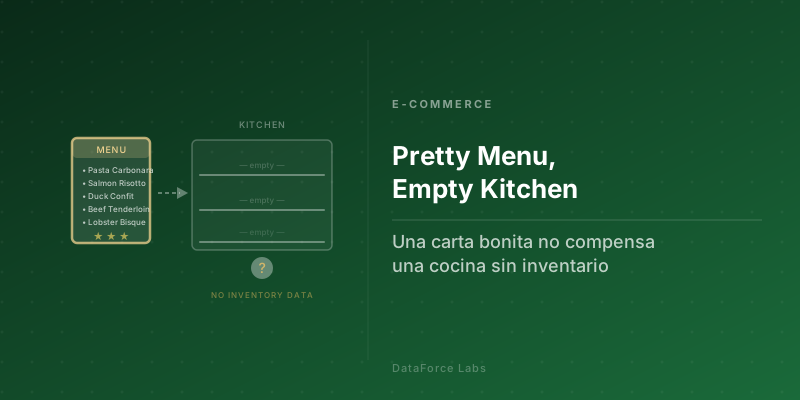
A Pretty Menu Doesn't Compensate for a Kitchen That Doesn't Know What's Available 🍽️
The Shopping Experience Depends on Synchronized Systems
In e-commerce it's believed that a well-designed user experience solves conversion. What almost never disconnects the customer is an unattractive interface, but a system that doesn't synchronize what it shows with what it can deliver. AI doesn't improve an experience without architecture.
A marketplace works like a restaurant with hundreds of tables and specialized kitchens. The waiter is the experience: search, catalog, cart, and checkout. The kitchen is the operation: inventory, payments, fulfillment, anti-fraud, and sellers. When both parts have separate logic, the result is a menu that promises what's no longer in stock.
Imagine a customer finding what they looked for, adding it to the cart, and at checkout discovering there's no stock, the price was an expired promotion, or payment was rejected without explanation. The problem didn't happen at checkout: catalog and inventory never talked in real time. A global IBM Institute for Business Value study found that only 14% of respondents were satisfied with online shopping. That gap is not only design; it is also synchronization.
That's where event-driven architecture changes things. Each relevant change, updated price, deactivated seller, or detected fraud, is transmitted as an event that components process without waiting. IBM's overview of event-driven architecture reports adoption near 37% and a projected market above USD 16.5 billion by 2027.
Semantic search, which understands user intent not just the exact words they type, needs catalog, availability, and prices synchronized for the recommendation to be executable. If the kitchen doesn't know what's available, the waiter can suggest the fanciest dish and the customer still leaves without eating.
Micro-frontends, where each section of the store like catalog, cart, or payments functions as an independent application, allow each team to update their part without stopping the rest. The promotions team changes their logic without affecting checkout, and the anti-fraud team deploys a new model without the search noticing.
A pretty menu doesn't compensate for a kitchen that doesn't know what's available.
First connect catalog, inventory, and prices by events so the experience reflects actual state. Then separate each frontend section so changes happen without massive coordination. Then integrate AI as a layer that acts on real-time signals. Finally measure not just conversion rate but the distance between what's shown and what can be delivered.