
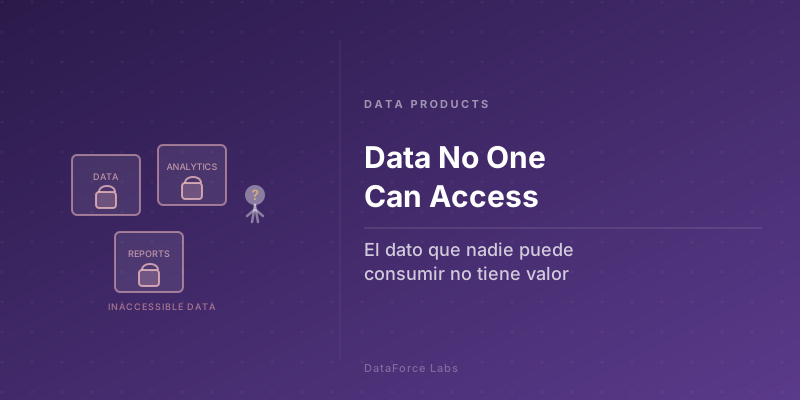
Data No One Can Use Is Like Savings No One Can Access 💰
Storing Data Does Not Guarantee That Anyone Can Use It
Many organizations have invested years accumulating data in large central repositories. They have plenty of stored information. But when an area needs an analysis, they have to ask the technical team to extract, clean, and deliver. That bottleneck is the signal that the model no longer scales.
The most useful data architecture is not the biggest. It's the one that puts the right data in the hands of whoever needs it, when they need it.
A data product is a reusable package that combines data, context, and usage rules, designed so other teams can consume it without having to go to the source to process it from scratch. Each producing area takes responsibility for maintaining it with quality and offers it to the rest of the organization.
Think of a well-organized family savings fund. Money isn't stored from each member in separate boxes that no one can touch. Instruments are created that everyone can use when they need them: the education fund, the emergency fund, the vacation fund. Each has an owner, clear access rules, and a promise of reliable balance.
Data no one can consume is like savings no one can access. If the sales team has its data in its own system and finance can't reach it without a multi-day extraction process, that data isn't producing value. It's stored in the shoebox.
In the traditional model, success was measured in stored terabytes. In the data products model, success is measured in how many real decisions were made using that data. A bank that documented this transition enabled 60 different use cases from a single customer data product, reported in a 2022 Harvard Business Review article.
The data consumer, which is the team or system that uses that product without building it from scratch, stops depending on the technical team for each query. The marketing team uses the customer product maintained by CRM. The risk team consumes the transaction product administered by operations. Each product has an owner, verified quality, and clear documentation.
[YouTube embed: Data Mesh: Data-Driven Value at Scale (Zhamak Dehghani)]
First identify what data your area generates and who else needs it. Then verify whether that data exists as an accessible product or only as an internal table. Then define who responds for the quality of each critical piece of data. Finally evaluate whether your strategic decisions depend on reliable products or on manual extractions that change each month.
How many of your most important reports depend on data that only the technical team can prepare? 💰