
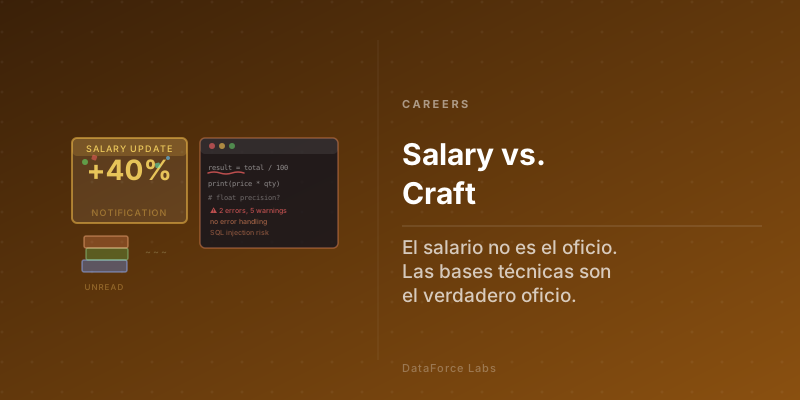
💸 Salary Is Not the Craft
The Market Rewards Problem-Solving Ability, Not Proximity to a Tool
In Colombia and LATAM it became common to think entering technology is changing paychecks with a short course, an eye-catching certificate, and an assembled bio. The promise has a basis. There's demand, better salaries than many sectors, and more entry routes.
But changing payroll is not building craft.
The technology market doesn't pay just for being near new tools; it pays for solving problems with incomplete data, technical debt, business pressure, and consequences if something fails. Paycheck rises fast, but professional budget sustains itself with foundations.
The MinTIC, Fedesoft, and Cenisoft study on digital talent in Colombia reports demand in Big Data, analytics, artificial intelligence, cloud, cybersecurity, DevOps, and Full Stack development. It also shows low advanced depth compared to market size. The signal is not that people wanting to enter are missing. People sustaining complex decisions are missing.
The OECD formulates it from another angle. Advanced digital skills, like programming and artificial intelligence, work better when supported by foundations of reading, calculation, problem-solving, communication, and continuous learning. The IDB adds that a digital skill is not just using technology, but accessing, managing, evaluating, and creating information safely and effectively.
Let's think about personal finances. A person can receive a raise and remain broke if they don't know how to budget, distinguish spending from investment, or anticipate debt. Technology works the same way. A high salary without technical foundation can hide fragility until production, audit, scale, or a serious interview arrives.
The central concept is sustainable technical employability. It's not getting the first job because of closeness to hype, but building capacity to learn, decide, and answer for real systems. It includes programming, data, architecture, security, and operation. Foundation doesn't mean knowing everything, it means understanding why something works, when it stops working, and what it costs to maintain.
Paycheck doesn't teach budgeting. A profile without foundation usually depends on the exact tutorial, the trending provider, or a recipe they can't adapt. A profile with judgment can change tools because they understand the problem beneath the tool.
# Without foundation
def total_ventas(filas):
    total = 0
    for fila in filas:
        if fila["estado"] == "pagado":
            total += float(fila["valor"])
    return total

# With foundation
from decimal import Decimal

def total_ventas(filas):
    estados_validos = {"pagado", "conciliado"}
    valores = [
        Decimal(str(f["valor"]))
        for f in filas
        if f.get("estado") in estados_validos and f.get("valor") is not None
    ]
    return sum(valores, Decimal("0"))
The first version seems sufficient in a small test, but fails with decimal money, different accounting states, or incomplete records. The second isn't flashier. It's more responsible. Uses Decimal to avoid rounding errors, validates business states, and doesn't break on null data. That difference weighs when a report feeds invoicing, portfolio, or commercial commission.
Colombia experienced something similar with Occupational Health and Safety. Law 1562 of 2012 and Decree 1072 of 2015 formalized management systems and created demand. Whoever only filled forms fell short when it came to identifying hazards, measuring risks, and improving processes. The paperwork was not the craft.
Recommended Resources
- Study on Digital Employability and Talent in Colombia type report
- OECD Digital Economy Outlook 2024 volume 2 type report
- IDB Skills for Life Series Digital Skills type peer-reviewed publication
- Coursera Job Skills Report 2026 type learning report
Hype opens doors, and that shouldn't be dismissed. Many people in transition come from administration, accounting, support, industry, or health, and bring valuable context. The problem appears when that context isn't combined with actual technical practice. In an interview for data engineering it's not enough to say Power BI is known if you can't explain where the data comes from, how it's validated, and who responds if the dashboard induces a bad decision.
Coursera reported in its 2026 Job Skills Report strong growth in GenAI and critical thinking enrollments among enterprise learners. The useful reading is not collecting courses, but moving toward less superficial mixture. Tool, judgment, domain, and communication. Paycheck doesn't teach budgeting.
In technical processes you notice quickly. The pocket candidate talks about stack, remote salary, and certifications. When asked about concurrency, data quality, testing, security, or operational cost, they change subject. The candidate with craft asks about constraints, shows how they'd validate, recognizes limits, and proposes a verifiable route.
First review a vacancy you're interested in and separate tools from foundations, then practice a small case with dirty data and validate result against business rules, then use cited resources to measure what foundations you lack, finally build public evidence of judgment with projects that explain decisions, errors, and costs.
What difference have you seen in your company between someone who arrived for the hype and someone already building real technical craft? 💬