
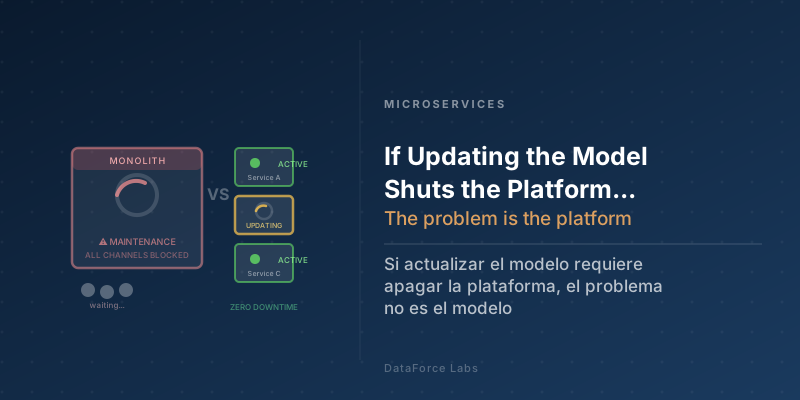
If You Have to Shut Down the Platform to Update the Model, the Problem Is Not the Model 🔧
Why an AI Model Update Can Stop the Platform
It's believed that in telecommunications AI fails because of insufficient data. In most cases it fails because the architecture doesn't allow prediction to reach those who must act. It's not a data problem, it's a structure problem.
Telecommunications combine high volume, multiple channels, and decisions that don't wait. An operator detecting a failure, an agent on a complaint, and a self-service portal share infrastructure but serve different purposes. When that infrastructure can't move by parts, AI loses the speed it needs to be useful.
Imagine a platform where churn, self-service, and tickets share code. Improving the abandonment model forces deployment to freeze, coordinate with other modules, and plan a maintenance window. The customer about to cancel does so while the team waits for approval. It's not lack of analysis, it's inability to act.
Microservices and Model Serving for Independent Deployments
That's where microservices, where each business capability lives as a separate component that can be updated without stopping the others, change the scenario. The churn model is retrained and deployed without the portal or tickets knowing something changed. In a 2021 IBM survey of more than 1,200 developers and IT executives, 87% of microservices users agreed that adoption was worth the expense and effort.
BFF and Event-Driven Architecture
But separating services doesn't solve everything. A mobile app, a web portal, and an agent don't need the same response format. The BFF pattern, Backend for Frontend, places a layer that adapts the response to the channel requesting it. This way the incident model delivers exactly what the agent needs on the call without saturating other channels.
The same thing happens when the network detects an anomaly or billing identifies an unusual pattern. Event-driven architecture allows that signal to reach whoever needs it without paralyzing the rest. NVIDIA's 2024 report found that 90% of more than 400 surveyed telecommunications professionals were assessing, piloting, implementing, or using AI. The question isn't how many organizations started, but how many can make AI act on time.
If you have to shut down the platform to update the churn model, the problem is not the model.
An Operating Pattern for Updating Models Without Downtime
First separate capabilities into components that evolve without massive coordination. Then connect those components by events so information flows without anyone requesting it. Then adapt the response to the channel consuming the intelligence. Finally govern with centralized visibility so autonomy doesn't become opacity.