
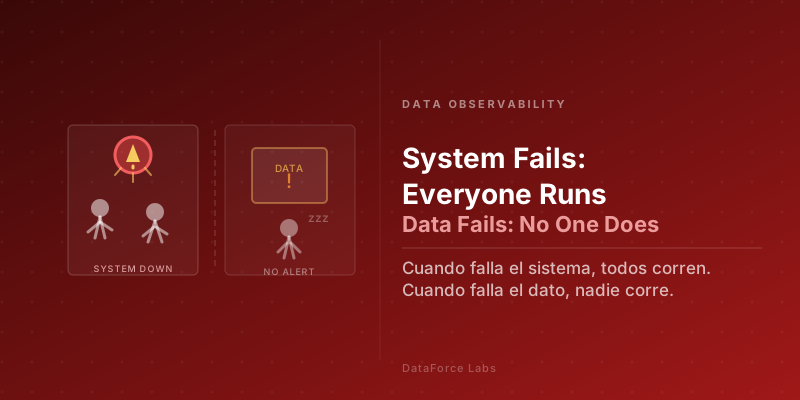
🍽️ When the System Falls, Everyone Runs. When Data Fails, No One Runs
Data Quality Also Needs Alerts and Ownership
When an enterprise application goes down, technology teams know about it in seconds and act immediately. When the data feeding it has had quality problems for weeks, the company discovers it only when the damage already appears in the results. The difference between one problem and the other is not its severity, but when it becomes visible.
The problem is not that data fails, but that no one has the same attention over it that they have over the systems that use it.
Data observability is the practice of continuously monitoring the state, quality, and behavior of data throughout the processes and systems it travels through in an organization. It's not just detecting that something went wrong. It's understanding when it happened, why it happened, and what part of the business will receive that impact before it reaches the decision point.
Think of a restaurant. If the point of sale fails, the waiter knows in seconds, the manager escalates it, and the customer waits. The problem has a face, name, and immediate solution. But if a batch of ingredients arrives outside the correct temperature and no one verifies it, the dishes that night look normal. The dining room operates, the system registers, and no one knows the kitchen is sending dishes in bad condition.
Something similar happens in most companies, where reports keep publishing without anyone verifying whether the data generating them remains valid. Unity Software operated with incorrect data for months. When it disclosed the issue in 2022, it estimated about USD 110 million in lost revenue tied to underperforming models, delayed initiatives, and retraining, according to IBM's analysis of the cost of poor data quality. The kitchen had been sending plates in bad condition without the dining room knowing.
What prevents that is having the data pipeline watched, which is the automated flow of processes that transports, transforms, and delivers data from its origin to whoever uses it. Without that monitoring, records with errors pass without alert because no one instrumented the conduit. The kitchen continues sending plates in bad condition while the business operates without knowing.
Detecting the problem in the kitchen always costs less than having served it at the table.
First define what should be true about the data that produce your most important decisions. Then configure alerts that notify when any of those criteria fail before the problem reaches the analysis. Then extend that monitoring to the flow of processes that moves the data to its destination. Finally treat a data quality failure with the same urgency as an application outage.
Does your company see the state of data before it reaches those who decide? 🍽️