
🏆 The Match Is Not Won on the Whiteboard
A Forecast Must Change When Operations Change
Many planning departments in Colombia spend weeks building projections of sales, inventory, or budget with the goal of getting them exactly right. When the number doesn't match reality, the most common reaction is to find the culprit, review who calculated wrong or what data arrived late.
The problem is not that the projection fails, but that the team doesn't know what to do when that happens.
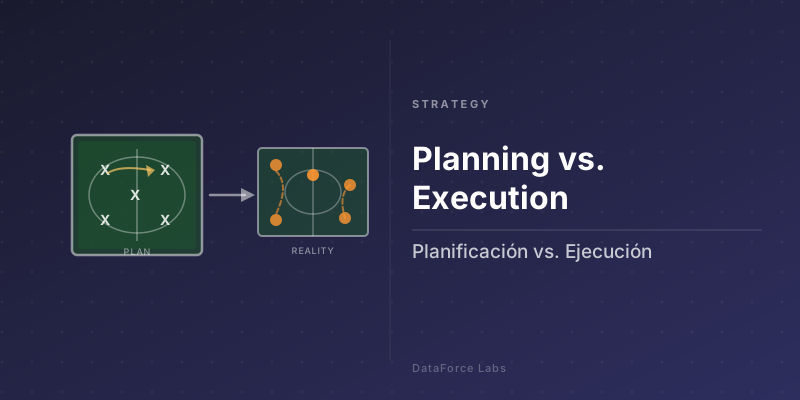
A forecast, which is the estimation of what will happen with sales, costs, or demand in a certain period, functions like the tactic a football coach draws on the whiteboard before each match. It defines the formation, anticipates the opposing play, and tells each person where to be. It's the best available plan with the information that exists. But the match doesn't wait for the whiteboard to be right.
The first half starts and things go differently. The opponent changes the scheme, the key player gets injured, and it rains. The score reflects that, not the initial tactic. Here's where a team that knows how to play differs from one that only knows how to plan. The one that knows how to play adjusts at halftime, moves pieces, and changes the bet. The other hopes reality adjusts to the plan.
In many Colombian companies, the equivalent of the halftime adjustment never arrives. The quarter's forecast is published in January and no one touches it until the cycle ends. Meanwhile, the reports don't match the purchase orders, the commercial department negotiated discounts that no one recorded, and the inventory became misaligned. Each department has its own version of the score and no one knows which one is real. When someone asks for explanations, the timeout already passed reconciling numbers, not acting.
Adaptive planning, which means reviewing and correcting projections regularly rather than treating them as an immovable commitment, reduces those kinds of friction. IBM Think points it out in its forecasting guide: projections are a guide for decision-making, not its determinant. The match doesn't wait for the whiteboard to be right, and the plan can't stay still when the score changes.
The skill is not guessing the result well, it's knowing what to move when things get misaligned.
First establish with what frequency the team will review projections during the cycle, not at the end. Then define who has authority to adjust without needing approval from three levels. Then create a brief and regular space to contrast the plan with what the real data is showing. Finally measure the speed with which the team reacts to error, not just how accurate the original forecast was.