
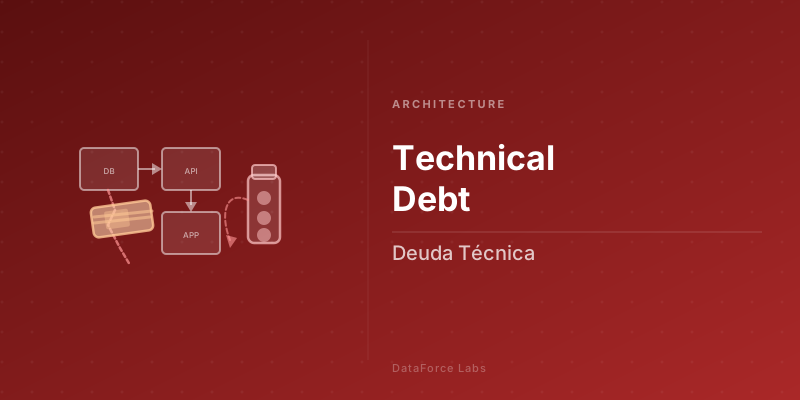
💊 The Pill That Delays Pain But Doesn't Cure It
Reducing the Bill Does Not Remove the Cause of Cost
Many leaders celebrate when the IT department manages to reduce the technology bill by the end of the quarter. They see fewer lines in the budget and read it as a signal that someone did their job well. The team celebrates too because it escaped the pressure. But that relief usually lasts exactly one month, and the follow-up meeting in the next period starts exactly the same as before.
Reducing costs without touching the internal design of systems is not optimizing, it's deferring the bill with interest.
Systems architecture is the way in which the company's technological pieces are organized, how they communicate with each other, and how much unnecessary work they generate each time they process information. In other words, it's the structure that supports everything else. If that structure is broken from the root, no license cuts or server shutdowns will ever heal it.
It's like taking a pill for back pain that comes from incorrect posture. Relief arrives quickly and the person feels the problem is solved. They return to their normal activities, return to the same posture, and the pain returns the following month with the same intensity or worse. The doctor keeps treating symptoms and the posture never changes.
In many Colombian companies that cycle repeats without anyone naming it. Unused servers are shut down, software contracts are cut, the team is asked to speed up database queries. The bill goes down. But reprocessing continues, reconciliations don't balance, approvals are returned, and the IT department asks for budget again before the next quarter closes.
What no one wants to hear is that the cause is usually technical debt, which are rushed design decisions accumulated over time because there was always something more urgent to address. Each shortcut became additional maintenance, fragile code that can't handle changes, and systems that cost more than expected just to keep running. It's an invisible burden that grows on its own if no one addresses it. Martin Fowler, an expert in software design, described that accumulation as a debt that generates interest while unpaid.
Cutting without redesigning is continuing to take the pill. The pain returns the next month.
First identify which systems generate the most reprocessing and corrective maintenance each month. Then ask the team to explain in business terms what part comes from old design decisions. Then include in the budget real time to improve those pieces, not just maintain them. Finally measure whether the savings from the next cycle hold or the pain returned.