
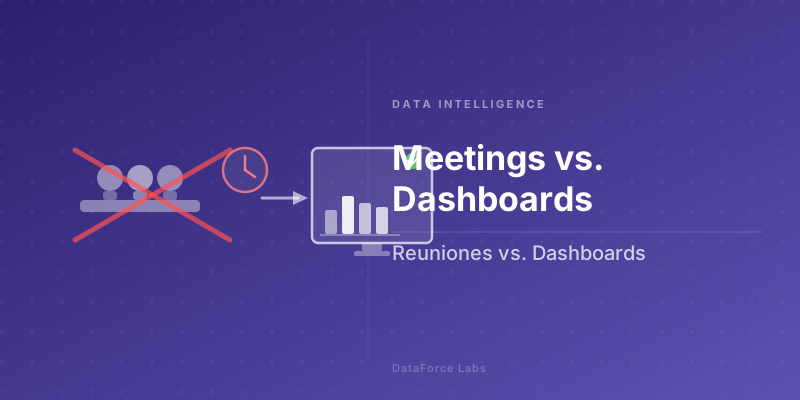
📊 The Meeting That Could Have Been a Dashboard
From Reporting Status to Making Decisions With Data
Many teams believe that meeting frequently demonstrates alignment and commitment. But when the calendar holds ten weekly meetings just to find out how things are going, what becomes evident is that information does not reach where it needs to on its own.
Meeting more does not mean being more aligned. It means no one trusts the data that already exists.
Imagine a highway during rush hour without synchronized traffic lights or clear signals. Every driver has to stop, roll down their window and ask the person next to them where to go. The same thing happens with follow-up meetings in many companies. Another unnecessary stop on a road that should flow smoothly.
An operational dashboard is a screen that displays updated business indicators. It works like a well-programmed traffic light. It does not eliminate traffic, but it allows everyone to move forward without stopping to ask the obvious. Units sold, pending orders, collection levels. All of that should be visible without calling eight people into a meeting.
But there is friction that few mention. For that dashboard to work, data has to be clean and come from a single source. That means stopping the practice of managing information in Excel files that each department handles its own way, with different names, different cuts and criteria that never align.
As long as that continues, people will need meetings to reconcile what the reports do not show clearly. Another unnecessary stop along the way.
In many Colombian companies the pattern repeats every week. Monday starts with planning, Tuesday with follow-up, Wednesday indicators are reviewed, Thursday reconciles what did not match and Friday the report for management is assembled (Perlow et al., 2017). Hours that could be spent deciding and executing are spent repeating data aloud. But since the road has no signs, everyone stops to ask.
Trust in data is not earned with a pretty tool. It is earned when departments agree on a single version of truth and when people stop remaking tables because everyone has their own master file. Until that happens, the bottleneck of meetings will remain intact.
First review which weekly meetings only serve to share information that a visible dashboard could show. Then unify the data sources that each department manages separately today. Next automate at least one report that someone builds by hand each week. Finally reserve meetings for decisions that truly need conversation.
How many of your meetings this week would disappear if everyone saw the same updated data on a single screen? 💬