
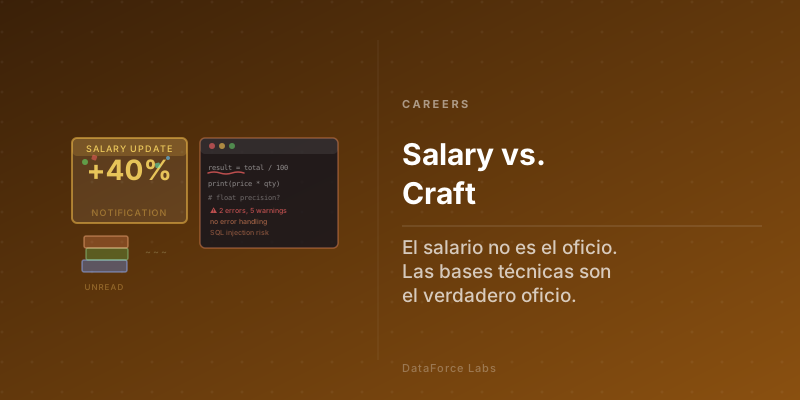
💸 El salario no es el oficio
En Colombia y LATAM se volvió común pensar que entrar a tecnología es cambiar de sueldo con un curso corto, una certificación llamativa y una bio armada. La promesa tiene base. Hay demanda, mejores salarios que en muchos sectores y más rutas de entrada.
Pero cambiar de nómina no es construir oficio.
El mercado tecnológico no paga solo por estar cerca de herramientas nuevas, paga por resolver problemas con datos incompletos, deuda técnica, presión de negocio y consecuencias si algo falla. La nómina sube rápido, pero el presupuesto profesional se sostiene con fundamentos.
El estudio de MinTIC, Fedesoft y Cenisoft sobre talento digital en Colombia reporta demanda en Big Data, analítica, inteligencia artificial, nube, ciberseguridad, DevOps y desarrollo Full Stack. También muestra baja profundización avanzada frente al tamaño del mercado. La señal no es que falte gente que quiera entrar. Falta gente que sostenga decisiones complejas.
La OCDE lo formula desde otro ángulo. Las habilidades digitales avanzadas, como programación e inteligencia artificial, funcionan mejor cuando se apoyan en bases de lectura, cálculo, solución de problemas, comunicación y aprendizaje continuo. El BID agrega que una habilidad digital no es solo usar tecnología, sino acceder, gestionar, evaluar y crear información de forma segura y efectiva.
Pensemos en finanzas personales. Una persona puede recibir un aumento y seguir quebrada si no sabe presupuestar, distinguir gasto de inversión ni anticipar deudas. En tecnología pasa igual. Un salario alto sin base técnica puede ocultar fragilidad hasta que llega producción, auditoría, escala o una entrevista seria.
El concepto central es empleabilidad técnica sostenible. No es conseguir el primer cargo por cercanía al hype, sino construir capacidad para aprender, decidir y responder por sistemas reales. Incluye programación, datos, arquitectura, seguridad y operación. Fundamento no significa saberlo todo, significa entender por qué algo funciona, cuándo deja de funcionar y qué cuesta mantenerlo.
La nómina no enseña el presupuesto. Un perfil sin base suele depender del tutorial exacto, del proveedor de moda o de una receta que no sabe adaptar. Un perfil con criterio puede cambiar de herramienta porque entiende el problema debajo de la herramienta.
# Sin base
def total_ventas(filas):
    total = 0
    for fila in filas:
        if fila["estado"] == "pagado":
            total += float(fila["valor"])
    return total

# Con base
from decimal import Decimal

def total_ventas(filas):
    estados_validos = {"pagado", "conciliado"}
    valores = [
        Decimal(str(f["valor"]))
        for f in filas
        if f.get("estado") in estados_validos and f.get("valor") is not None
    ]
    return sum(valores, Decimal("0"))
La primera versión parece suficiente en una prueba pequeña, pero falla con decimales de dinero, estados contables distintos o registros incompletos. La segunda no es más vistosa. Es más responsable. Usa Decimal para evitar errores de redondeo, valida estados del negocio y no revienta por un dato nulo. Esa diferencia pesa cuando un reporte alimenta facturación, cartera o comisión comercial.
Colombia vivió algo parecido con Seguridad y Salud en el Trabajo. La Ley 1562 de 2012 y el Decreto 1072 de 2015 formalizaron sistemas de gestión y crearon demanda. Quien solo llenaba formatos quedó corto cuando tocaba identificar peligros, medir riesgos y mejorar procesos. El papel no era el oficio.
Recursos recomendados
- Estudio de Empleabilidad y Talento Digital en Colombia tipo informe https://cenisoft.org/estudioempleabilidadti/
- OECD Digital Economy Outlook 2024 volumen 2 tipo informe https://www.oecd.org/en/publications/oecd-digital-economy-outlook-2024-volume-2_3adf705b-en.html
- BID Skills for Life Series Digital Skills tipo publicación revisada por pares https://publications.iadb.org/en/skills-life-series-digital-skills
- Coursera Job Skills Report 2026 tipo reporte de aprendizaje https://www.coursera.org/skills-reports/job-skills
El hype abre puertas, y eso no hay que despreciarlo. Muchas personas en transición vienen de administración, contabilidad, soporte, industria o salud, y traen contexto valioso. El problema aparece cuando ese contexto no se combina con práctica técnica real. En una entrevista para ingeniería de datos no basta decir que se sabe Power BI si no se puede explicar de dónde viene el dato, cómo se valida y quién responde si el tablero induce una mala decisión.
Coursera reportó en su Job Skills Report 2026 un aumento fuerte en matrículas de GenAI y pensamiento crítico entre aprendices empresariales. La lectura útil no es coleccionar cursos, sino moverse hacia una mezcla menos superficial. Herramienta, criterio, dominio y comunicación. La nómina no enseña el presupuesto.
En procesos técnicos se nota rápido. El candidato de bolsillo habla de stack, salario remoto y certificaciones. Cuando le preguntan por concurrencia, calidad de datos, pruebas, seguridad o costo operativo, cambia el tema. El candidato con oficio pregunta por restricciones, muestra cómo validaría, reconoce límites y propone una ruta verificable.
Primero revisa una vacante que te interese y separa herramientas de fundamentos, luego practica un caso pequeño con datos sucios y valida el resultado contra reglas del negocio, después usa los recursos citados para medir qué bases te faltan, por último construye evidencia pública de criterio con proyectos que expliquen decisiones, errores y costos.
¿Qué diferencia has visto en tu empresa entre alguien que llegó por el hype y alguien que ya está construyendo oficio técnico real? 💬
Versión en inglés
💸 Salary Is Not the Craft
In Colombia and LATAM it became common to think entering technology is changing paychecks with a short course, an eye-catching certificate, and an assembled bio. The promise has a basis. There's demand, better salaries than many sectors, and more entry routes.
But changing payroll is not building craft.
The technology market doesn't pay just for being near new tools; it pays for solving problems with incomplete data, technical debt, business pressure, and consequences if something fails. Paycheck rises fast, but professional budget sustains itself with foundations.
The MinTIC, Fedesoft, and Cenisoft study on digital talent in Colombia reports demand in Big Data, analytics, artificial intelligence, cloud, cybersecurity, DevOps, and Full Stack development. It also shows low advanced depth compared to market size. The signal is not that people wanting to enter are missing. People sustaining complex decisions are missing.
The OECD formulates it from another angle. Advanced digital skills, like programming and artificial intelligence, work better when supported by foundations of reading, calculation, problem-solving, communication, and continuous learning. The IDB adds that a digital skill is not just using technology, but accessing, managing, evaluating, and creating information safely and effectively.
Let's think about personal finances. A person can receive a raise and remain broke if they don't know how to budget, distinguish spending from investment, or anticipate debt. Technology works the same way. A high salary without technical foundation can hide fragility until production, audit, scale, or a serious interview arrives.
The central concept is sustainable technical employability. It's not getting the first job because of closeness to hype, but building capacity to learn, decide, and answer for real systems. It includes programming, data, architecture, security, and operation. Foundation doesn't mean knowing everything, it means understanding why something works, when it stops working, and what it costs to maintain.
Paycheck doesn't teach budgeting. A profile without foundation usually depends on the exact tutorial, the trending provider, or a recipe they can't adapt. A profile with judgment can change tools because they understand the problem beneath the tool.
# Without foundation
def total_ventas(filas):
    total = 0
    for fila in filas:
        if fila["estado"] == "pagado":
            total += float(fila["valor"])
    return total

# With foundation
from decimal import Decimal

def total_ventas(filas):
    estados_validos = {"pagado", "conciliado"}
    valores = [
        Decimal(str(f["valor"]))
        for f in filas
        if f.get("estado") in estados_validos and f.get("valor") is not None
    ]
    return sum(valores, Decimal("0"))
The first version seems sufficient in a small test, but fails with decimal money, different accounting states, or incomplete records. The second isn't flashier. It's more responsible. Uses Decimal to avoid rounding errors, validates business states, and doesn't break on null data. That difference weighs when a report feeds invoicing, portfolio, or commercial commission.
Colombia experienced something similar with Occupational Health and Safety. Law 1562 of 2012 and Decree 1072 of 2015 formalized management systems and created demand. Whoever only filled forms fell short when it came to identifying hazards, measuring risks, and improving processes. The paperwork was not the craft.
Recommended Resources
- Study on Digital Employability and Talent in Colombia type report https://cenisoft.org/estudioempleabilidadti/
- OECD Digital Economy Outlook 2024 volume 2 type report https://www.oecd.org/en/publications/oecd-digital-economy-outlook-2024-volume-2_3adf705b-en.html
- IDB Skills for Life Series Digital Skills type peer-reviewed publication https://publications.iadb.org/en/skills-life-series-digital-skills
- Coursera Job Skills Report 2026 type learning report https://www.coursera.org/skills-reports/job-skills
Hype opens doors, and that shouldn't be dismissed. Many people in transition come from administration, accounting, support, industry, or health, and bring valuable context. The problem appears when that context isn't combined with actual technical practice. In an interview for data engineering it's not enough to say Power BI is known if you can't explain where the data comes from, how it's validated, and who responds if the dashboard induces a bad decision.
Coursera reported in its 2026 Job Skills Report strong growth in GenAI and critical thinking enrollments among enterprise learners. The useful reading is not collecting courses, but moving toward less superficial mixture. Tool, judgment, domain, and communication. Paycheck doesn't teach budgeting.
In technical processes you notice quickly. The pocket candidate talks about stack, remote salary, and certifications. When asked about concurrency, data quality, testing, security, or operational cost, they change subject. The candidate with craft asks about constraints, shows how they'd validate, recognizes limits, and proposes a verifiable route.
First review a vacancy you're interested in and separate tools from foundations, then practice a small case with dirty data and validate result against business rules, then use cited resources to measure what foundations you lack, finally build public evidence of judgment with projects that explain decisions, errors, and costs.
What difference have you seen in your company between someone who arrived for the hype and someone already building real technical craft? 💬