
🏟️ En legaltech, la IA que lee el contrato no es la que firma el concepto
Muchos piensan que la adopción de IA en servicios jurídicos avanza lento porque los abogados son conservadores. La fricción real no es cultural. La mayoría de organizaciones no ha definido todavía dónde termina el análisis que la IA hace bien y dónde empieza la responsabilidad profesional que ningún sistema puede asumir.
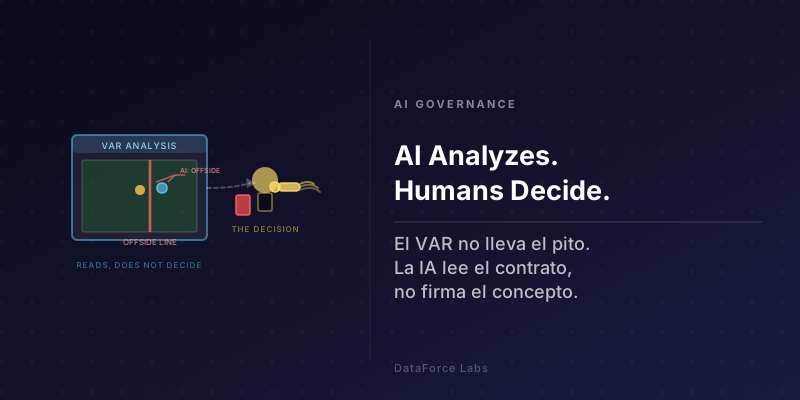
En el fútbol, el VAR puede detectar un fuera de lugar con milímetros de precisión, repetir la jugada y medir ángulos. Pero el árbitro es el único que puede mostrar la tarjeta. No porque el sistema sea impreciso, sino porque la sanción es un acto que alguien debe firmar. El VAR no lleva el pito.
En revisión documental o búsqueda normativa ocurre lo mismo. Un sistema puede leer cientos de contratos en minutos y señalar cláusulas desactualizadas o inconsistencias entre partes.
Un patrón como CQRS, donde leer un expediente y modificarlo son operaciones completamente separadas, permite que la IA trabaje sobre el documento sin tocar el registro oficial. El sistema analiza y sugiere. El abogado revisa y firma.
La arquitectura define esa frontera. Un BFF, que es una capa entre el sistema de gestión de casos y la pantalla del profesional, puede alimentar al asistente inteligente sin darle acceso de escritura al expediente. Así la IA agiliza la preparación del concepto. Pero el concepto sigue siendo de alguien.
La fricción aparece cuando la organización no tiene clara esa línea. El abogado que copia la respuesta del asistente en el correo al cliente sin revisarla, o el análisis que quedó adjunto al cierre del contrato sin que nadie lo validara, son síntomas de un flujo que no distinguió entre leer la jugada y tomar la decisión vinculante. El VAR no lleva el pito.
Thomson Reuters encuestó en 2024 a más de dos mil profesionales jurídicos y encontró que el 95% coincide en que la IA no debe tomar decisiones finales en asuntos legales complejos. El mismo estudio registra que el 63% ya la usa como punto de partida en investigación y resumen de documentos. No es una brecha de tecnología sino de claridad sobre quién responde. Consultar y decidir son cosas distintas.
En legaltech, la mejor arquitectura no es la que automatiza más, sino la que acelera criterio sin debilitar control. Primero hay que definir dónde está la línea entre análisis inteligente y decisión vinculante. Luego hay que asegurarse de que los flujos respetan esa línea. Después viene la capa de validación humana, visible y firmada. Por último se integra el modelo.
¿Cuándo fue la última vez que su equipo discutió quién firma cuando la IA sugiere y nadie revisa? 💬
Versión en inglés
🏟️ In LegalTech, the AI That Reads the Contract Is Not the One That Signs the Opinion
Many think AI adoption in legal services is slow because lawyers are conservative. The real friction is not cultural. Most organizations haven't yet defined where the analysis AI does well ends and where the professional responsibility that no system can assume begins.
In football, VAR can detect offsides with millimeter precision, replay the play, and measure angles. But the referee is the only one who can show the card. Not because the system is imprecise, but because the sanction is an act someone must sign. The VAR doesn't carry the whistle.
In document review or regulatory search the same thing happens. A system can read hundreds of contracts in minutes and flag outdated clauses or inconsistencies between parts.
A pattern like CQRS, where reading an file and modifying it are completely separate operations, allows AI to work on the document without touching the official record. The system analyzes and suggests. The lawyer reviews and signs.
Architecture defines that boundary. A BFF, which is a layer between the case management system and the professional's screen, can feed the intelligent assistant without giving it write access to the file. This way AI speeds up concept preparation. But the concept still belongs to someone.
Friction appears when the organization isn't clear on that line. The lawyer copying the assistant's response in the email to the client without reviewing it, or the analysis that remained attached to contract closure without anyone validating it, are symptoms of a flow that didn't distinguish between reading the play and making the binding decision. The VAR doesn't carry the whistle.
Thomson Reuters surveyed in 2024 more than two thousand legal professionals and found 95% agree AI shouldn't make final decisions in complex legal matters. The same study registers that 63% already use it as a starting point in research and document summary. It's not a technology gap but clarity about who responds. Consulting and deciding are different things.
In legaltech, the best architecture is not the one that automates more, but the one that accelerates judgment without weakening control. First you define where the line is between intelligent analysis and binding decision. Then you make sure flows respect that line. Then comes the human validation layer, visible and signed. Finally integrate the model.
When was the last time your team discussed who signs when AI suggests and no one reviews? 💬