
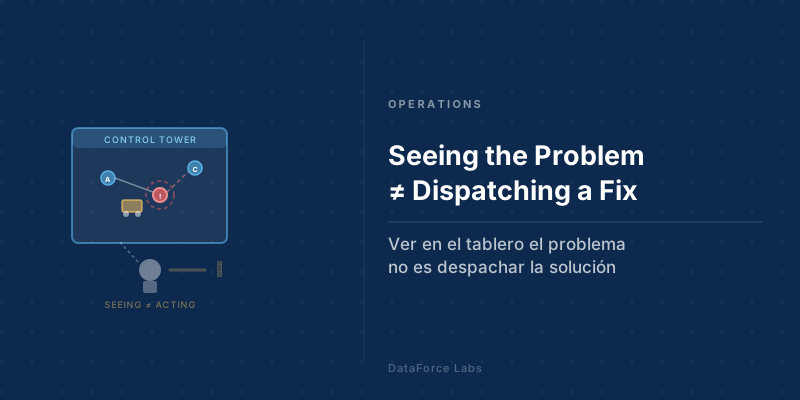
Ver en el tablero dónde está el problema no es lo mismo que despachar la solución 🚦
Cuando una empresa habla de inteligencia artificial en logística, el primer movimiento suele ser mejorar sus pronósticos. Los pronósticos son necesarios, pero la ventaja en una cadena de suministro no la da quien predice mejor, sino quien reacciona más rápido cuando la predicción ya no sirve.
Una central de operaciones no tiene valor si el operador solo puede ver el mapa. El valor aparece cuando el sistema coordina múltiples actores al mismo tiempo, gestiona excepciones y actualiza instrucciones sin esperar al siguiente turno. Ver en el tablero dónde está el problema no es lo mismo que despachar la solución.
En logística ocurre lo mismo. Un proveedor que no puede entregar, un camión detenido en aduana, una bodega sin espacio porque no anticipó el volumen del cierre de mes. Cada uno de esos eventos genera una señal que el siguiente actor necesita recibir antes de tomar su decisión. Si esa señal llega tarde, la cadena reacciona tarde.
La arquitectura orientada a eventos, diseño donde cada cambio en el estado de la cadena genera una notificación que los demás sistemas pueden consumir de inmediato, es la que permite coordinar esa reacción. Sin ella, el proveedor sabe que el camión se detuvo, la bodega no lo sabe y el cliente recibe una promesa de entrega que ya era incorrecta cuando se formuló.
La torre de control de supply chain, herramienta que centraliza la visibilidad de toda la cadena en tiempo real, necesita esa misma base para funcionar de verdad. Una torre que consolida solo datos históricos es un tablero pasivo. Una que consume eventos de inmediato y activa replanificación dinámica, capacidad de recalcular rutas y asignaciones cuando algo inesperado ocurre, es una herramienta de operación y no solo de reporte.
Ver en el tablero dónde está el problema no es lo mismo que despachar la solución. Accenture identificó que las organizaciones con capacidades avanzadas en supply chain son un 23% más rentables que sus pares. Esa diferencia rara vez está en tener más datos, sino en si el sistema puede traducir cada señal en una decisión útil antes de que el problema llegue al cliente.
Primero, identifica qué eventos de tu cadena no llegan a nadie hasta el día siguiente. Luego, calcula qué decisiones dependen de esa señal y cuánto cuesta procesarla tarde. Después, evalúa si tu arquitectura puede distribuir esos eventos en tiempo real o solo los guarda para reportes. Por último, cuando revises herramientas de visibilidad, pregunta cuántos minutos tarda el sistema en despachar la respuesta correcta al lugar correcto.
Versión en inglés
Seeing the Problem on the Dashboard Is Not the Same as Dispatching the Solution 🚦
When a company talks about artificial intelligence in logistics, the first move usually is to improve forecasts. Forecasts are necessary, but the advantage in a supply chain doesn't come from who predicts better, but from who reacts faster when the prediction no longer works.
An operations center has no value if the operator can only see the map. Value appears when the system coordinates multiple actors at the same time, manages exceptions, and updates instructions without waiting for the next shift. Seeing the problem on the dashboard is not the same as dispatching the solution.
The same thing happens in logistics. A supplier that can't deliver, a truck stopped in customs, a warehouse without space because it didn't anticipate month-end volume. Each of those events generates a signal that the next actor needs to receive before making their decision. If that signal arrives late, the chain reacts late.
Event-driven architecture, a design where each change in supply chain state generates a notification that other systems can consume immediately, is what allows coordinating that reaction. Without it, the supplier knows the truck stopped, the warehouse doesn't know it, and the customer receives a delivery promise that was already incorrect when it was made.
Supply chain control tower, a tool that centralizes the visibility of the entire chain in real-time, needs that same foundation to truly work. A tower that consolidates only historical data is a passive dashboard. One that consumes events immediately and activates dynamic replanning, the capacity to recalculate routes and allocations when something unexpected happens, is a tool for operation not just for reporting.
Seeing the problem on the dashboard is not the same as dispatching the solution. Accenture identified that organizations with advanced supply chain capabilities are 23% more profitable than their peers. That difference rarely lies in having more data, but in whether the system can translate each signal into a useful decision before the problem reaches the customer.
First identify what events from your chain don't reach anyone until the next day. Then calculate what decisions depend on that signal and how much it costs to process it late. Then evaluate whether your architecture can distribute those events in real-time or only stores them for reports. Finally when reviewing visibility tools, ask how many minutes it takes the system to dispatch the correct response to the right place.