
El sistema que "siempre ha funcionado" puede ser el más riesgoso 🩺
Muchos equipos tienen un mantra para los sistemas viejos: si funciona, no lo toques. Lo que parece prudencia puede ser la razón por la que los reportes llevan meses mostrando números incorrectos sin que nadie lo note.
El mayor riesgo no es el sistema que falla y avisa. Es el que falla en silencio y sigue produciendo resultados.
Un pipeline de datos es el recorrido que hace la información desde su origen (ventas, cartera, almacén) hasta el reporte que usa el líder para decidir. Cuando ese recorrido tiene una fuga, los datos llegan, pero llegan mal. La deuda técnica silenciosa es la acumulación de esas fugas que nadie reparó porque el sistema seguía entregando.
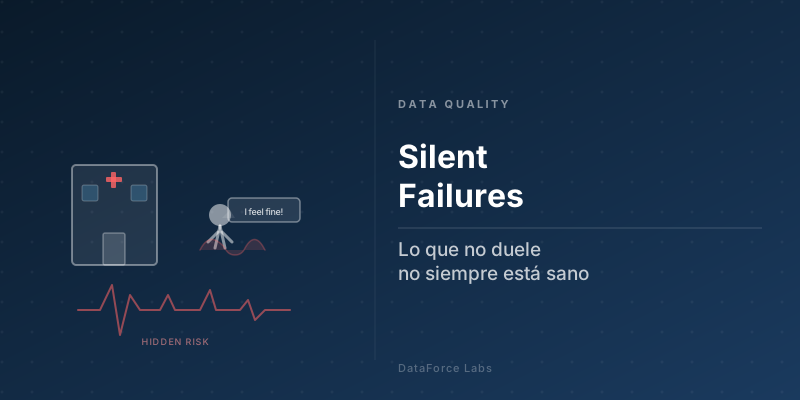
Piensen en alguien que evita los exámenes médicos porque no siente nada. Sin síntomas visibles, la sensación es de salud. Pero la presión alta no avisa con dolor. El colesterol elevado tampoco. Lo que no duele no siempre está sano.
Eso mismo ocurre con un pipeline que opera hace años sin revisión. Los reportes se generan a tiempo, las cifras de ventas aparecen, las de inventario también. Pero si hace dos años alguien ajustó una fórmula de descuento sin actualizar la lógica anterior, los márgenes que el equipo directivo lee hoy son incorrectos. El sistema no falló. Simplemente entregó lo que aprendió a entregar.
Y eso es exactamente lo que lo hace peligroso. Lo que no duele no siempre está sano. Los equipos más expuestos suelen ser los que llevan más tiempo sin hacerse ese chequeo.
La señal más común no llega como una alerta técnica. Llega cuando finanzas cierra el mes con una cifra distinta a la que reportó ventas, o cuando la dirección pide un análisis y el equipo tarda días en conciliar antes de entregarlo. Esas discusiones sobre cuál dato es el correcto suelen tener origen en pipelines que nadie revisó en meses.
Ward Cunningham, quien introdujo el concepto de deuda técnica, lo comparó con una deuda financiera. Cada parche provisional que no se corrige genera intereses que se pagan después. Con los pipelines, esos intereses no se ven en el sistema. Se ven en decisiones tomadas sobre datos que ya no son confiables.
Primero, identifique los pipelines que producen sus reportes críticos y averigüe cuándo fue la última vez que alguien los revisó. Luego, pida que se documente qué hace cada uno en lenguaje sencillo. Después, establezca una revisión periódica, como un chequeo de rutina. Por último, antes de confiar en un informe estratégico, pregunte si el recorrido de ese dato ha cambiado recientemente.
¿Cuándo fue la última vez que alguien revisó los pipelines detrás de sus informes más importantes? 🩺
Versión en inglés
The System That "Has Always Worked" Can Be the Riskiest 🩺
Many teams have a mantra for old systems: if it works, don't touch it. What seems prudent may be the reason reports have been showing incorrect numbers for months without anyone noticing.
The biggest risk is not the system that fails and warns. It's the one that fails silently and keeps producing results.
A data pipeline is the journey information makes from its origin (sales, portfolio, warehouse) to the report that the leader uses to decide. When that journey has a leak, data arrives, but it arrives wrong. Silent technical debt is the accumulation of those leaks that no one fixed because the system kept delivering.
Think of someone who avoids medical exams because they feel nothing. With no visible symptoms, the feeling is of health. But high blood pressure doesn't warn with pain. High cholesterol doesn't either. What doesn't hurt isn't always healthy.
That same thing happens with a pipeline that has operated for years without review. Reports are generated on time, sales figures appear, inventory does too. But if two years ago someone adjusted a discount formula without updating the prior logic, the margins that executive leadership reads today are incorrect. The system didn't fail. It simply kept delivering what it learned to deliver.
And that's exactly what makes it dangerous. What doesn't hurt isn't always healthy. The teams most exposed are usually the ones that haven't had that checkup in the longest.
The most common signal doesn't arrive as a technical alert. It arrives when finance closes the month with a different figure than sales reported, or when leadership asks for analysis and the team takes days to reconcile before delivering it. Those discussions about which data is correct usually originate in pipelines no one reviewed in months.
Ward Cunningham, who introduced the concept of technical debt, compared it to financial debt. Each temporary patch that isn't corrected generates interest that gets paid later. With pipelines, that interest isn't visible in the system. It shows in decisions made about data that are no longer reliable.
First identify the pipelines that produce your critical reports and find out when they were last reviewed. Then ask that be documented what each one does in simple language. Then establish periodic review, like a routine checkup. Finally, before trusting a strategic report, ask if the path of that data has recently changed.
When was the last time someone reviewed the pipelines behind your most important reports? 🩺