
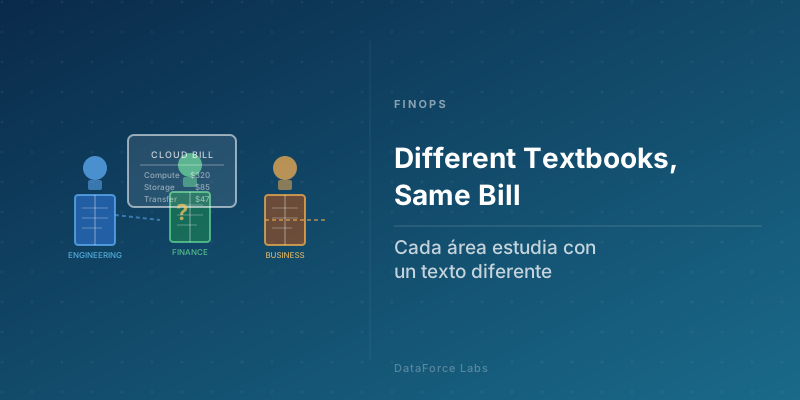
📚 Cuando cada área estudia con un texto diferente
Muchas empresas creen que el control del gasto en tecnología es un asunto del equipo de TI. Cuando la factura sube, el CTO recibe el llamado, el equipo técnico ajusta configuraciones y en la siguiente reunión los números cuadran. Pero el área financiera sigue sin entender qué generó ese gasto y el área de negocio sigue aprobando iniciativas sin saber cuánto costará operarlas.
El problema no está en que el gasto tecnológico sea difícil de controlar, sino en que cada área lo mide con sus propios criterios y nadie habla el mismo idioma cuando se sientan juntos.
FinOps, que es la disciplina de gestionar el valor y el costo tecnológico de forma conjunta entre ingeniería, finanzas y negocio, nace de esa fricción. No es una herramienta ni un cargo. Es la forma en que cada área entiende qué implican sus decisiones para el presupuesto del resto.
Piense en un colegio donde el profesor de matemáticas, el de lengua y el de gestión empresarial definen por separado qué significa aprender bien. Cada uno evalúa con su propio sistema y entrega su nota. Cuando cada área estudia con un texto diferente, el examen final no tiene una sola respuesta correcta.
Eso mismo pasa cuando la factura de nube llega. TI la interpreta en recursos y configuraciones, finanzas la interpreta en centros de costo y negocio no sabe qué parte del gasto corresponde a sus iniciativas. La reunión siguiente empieza con tres versiones del mismo número y nadie sabe cuál es la oficial.
La FinOps Foundation lo describe como el punto de partida del modelo de madurez, que mide qué tan coordinadas están esas tres áreas en el trabajo diario. Una organización en fase inicial reacciona después de que el gasto ya creció. Una más avanzada incorpora el costo como criterio desde que se aprueba cada iniciativa.
En muchas empresas colombianas esa conversación nunca se cruzó. Finanzas cierra el período con su reporte y TI cierra el período con el suyo. Ninguno es incorrecto, pero tampoco son comparables. Cuando cada área estudia con un texto diferente, nadie reprueba solo y todos pierden juntos cuando llega la evaluación real.
Primero verifique si su área financiera puede asignar el gasto tecnológico al equipo o iniciativa que lo generó sin mediación del equipo de TI. Luego reúna a representantes de finanzas, tecnología y negocio para revisar juntos la última factura de nube. Después acuerden un solo criterio para interpretar si ese gasto fue bueno o malo en función de los resultados que generó. Por último mida con qué frecuencia esas tres áreas toman decisiones de inversión tecnológica juntas.
¿En su empresa finanzas y tecnología usan las mismas cifras cuando hablan del costo de operar en la nube? 📚
Versión en inglés
📚 When Each Department Studies from a Different Textbook
Many companies believe that controlling technology spending is an IT team matter. When the bill goes up, the CTO gets called, the technical team adjusts configurations, and at the next meeting the numbers line up. But the finance department still doesn't understand what generated that spending, and the business area keeps approving initiatives without knowing how much they'll cost to operate.
The problem is not that technology spending is hard to control, but that each department measures it by their own criteria and no one speaks the same language when they sit together.
FinOps, which is the discipline of managing technological value and cost jointly between engineering, finance, and business, emerges from that friction. It's not a tool or a position. It's the way each department understands what their decisions imply for the rest of the budget.
Think of a school where the math teacher, the language teacher, and the business management teacher separately define what learning well means. Each one evaluates with their own system and delivers their grade. When each department studies from a different textbook, the final exam doesn't have a single correct answer.
That same thing happens when the cloud bill arrives. IT interprets it in resources and configurations, finance interprets it in cost centers, and business doesn't know what part of the spending corresponds to its initiatives. The next meeting starts with three versions of the same number and no one knows which is official.
The FinOps Foundation describes it as the starting point of the maturity model, which measures how coordinated those three departments are in daily work. An organization in early phase reacts after spending already grew. A more advanced one incorporates cost as a criterion from the moment each initiative is approved.
In many Colombian companies that conversation never happened. Finance closes the period with its report and IT closes the period with theirs. Neither is wrong, but they're not comparable either. When each department studies from a different textbook, no one fails alone and everyone loses together when the real evaluation comes.
First verify whether your finance department can assign technology spending to the team or initiative that generated it without IT department mediation. Then gather representatives from finance, technology, and business to review the last cloud bill together. Then agree on a single criterion to interpret whether that spending was good or bad based on the results it generated. Finally measure how often those three departments make technology investment decisions together.
Do finance and technology use the same numbers when they talk about the cost of operating in the cloud in your company? 📚