
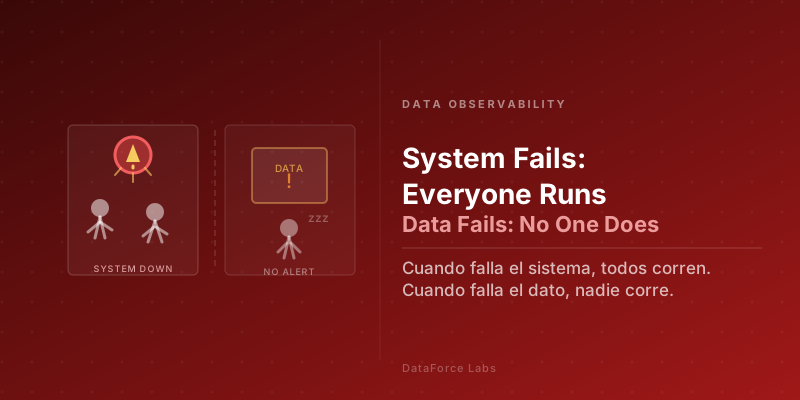
🍽️ Cuando se cae el sistema, todos corren. Cuando falla el dato, nadie corre
Cuando una aplicación empresarial cae, los equipos de tecnología lo saben en segundos y actúan de inmediato. Cuando los datos que la alimentan llevan semanas con problemas de calidad, la empresa lo descubre solo cuando el daño ya apareció en los resultados. La diferencia entre un problema y el otro no es su gravedad, sino cuándo se hace visible.
El problema no está en que los datos fallen, sino en que nadie tiene sobre ellos la misma atención que tiene sobre los sistemas que los usan.
La observabilidad de datos es la práctica de monitorear de forma continua el estado, la calidad y el comportamiento del dato a lo largo de los procesos y sistemas por los que viaja en una organización. No es solo detectar que algo salió mal. Es entender cuándo ocurrió, por qué ocurrió y qué parte del negocio va a recibir ese impacto antes de que llegue al punto de decisión.
Piense en un restaurante. Si el punto de venta falla, el mesero lo sabe en segundos, el gerente lo escala y el cliente lo espera. El problema tiene cara, nombre y solución inmediata. Pero si un lote de ingredientes entra fuera de temperatura y nadie lo verifica, los platos de esa noche parecen normales. El salón opera, el sistema registra y nadie sabe que la cocina está enviando platos en mal estado.
Algo así ocurre en la mayoría de las empresas, donde los reportes siguen publicándose sin que nadie verifique si los datos que los generan siguen siendo válidos. Unity Software operó con datos incorrectos durante meses. Cuando lo descubrió en 2022, la acción cayó un 30% y las pérdidas llegaron a 110 millones de dólares, según IBM. La cocina había estado enviando platos en mal estado sin que el salón lo supiera.
Lo que previene eso es tener vigilado el pipeline de datos, que es el flujo automatizado de procesos que transporta, transforma y entrega datos desde su origen hasta quien los usa. Sin ese monitoreo, los registros con errores pasan sin alerta porque nadie instrumentó el conducto. La cocina sigue enviando platos en mal estado mientras el negocio opera sin saberlo.
Detectar el problema en la cocina siempre cuesta menos que haberlo servido en la mesa.
Primero defina qué debe ser cierto sobre los datos que producen sus decisiones más importantes. Luego configure alertas que notifiquen cuando alguno de esos criterios falle antes de que el problema llegue al análisis. Después extienda ese monitoreo al flujo de procesos que mueve el dato hasta su destino. Por último trate un fallo de calidad de datos con la misma urgencia que trata la caída de una aplicación.
¿En su empresa ven el estado del dato antes de que llegue a quienes deciden? 🍽️
Versión en inglés
🍽️ When the System Falls, Everyone Runs. When Data Fails, No One Runs
When an enterprise application goes down, technology teams know about it in seconds and act immediately. When the data feeding it has had quality problems for weeks, the company discovers it only when the damage already appears in the results. The difference between one problem and the other is not its severity, but when it becomes visible.
The problem is not that data fails, but that no one has the same attention over it that they have over the systems that use it.
Data observability is the practice of continuously monitoring the state, quality, and behavior of data throughout the processes and systems it travels through in an organization. It's not just detecting that something went wrong. It's understanding when it happened, why it happened, and what part of the business will receive that impact before it reaches the decision point.
Think of a restaurant. If the point of sale fails, the waiter knows in seconds, the manager escalates it, and the customer waits. The problem has a face, name, and immediate solution. But if a batch of ingredients arrives outside the correct temperature and no one verifies it, the dishes that night look normal. The dining room operates, the system registers, and no one knows the kitchen is sending dishes in bad condition.
Something similar happens in most companies, where reports keep publishing without anyone verifying whether the data generating them remains valid. Unity Software operated with incorrect data for months. When it discovered it in 2022, the stock fell 30% and losses reached 110 million dollars, according to IBM. The kitchen had been sending plates in bad condition without the dining room knowing.
What prevents that is having the data pipeline watched, which is the automated flow of processes that transports, transforms, and delivers data from its origin to whoever uses it. Without that monitoring, records with errors pass without alert because no one instrumented the conduit. The kitchen continues sending plates in bad condition while the business operates without knowing.
Detecting the problem in the kitchen always costs less than having served it at the table.
First define what should be true about the data that produce your most important decisions. Then configure alerts that notify when any of those criteria fail before the problem reaches the analysis. Then extend that monitoring to the flow of processes that moves the data to its destination. Finally treat a data quality failure with the same urgency as an application outage.
Does your company see the state of data before it reaches those who decide? 🍽️