
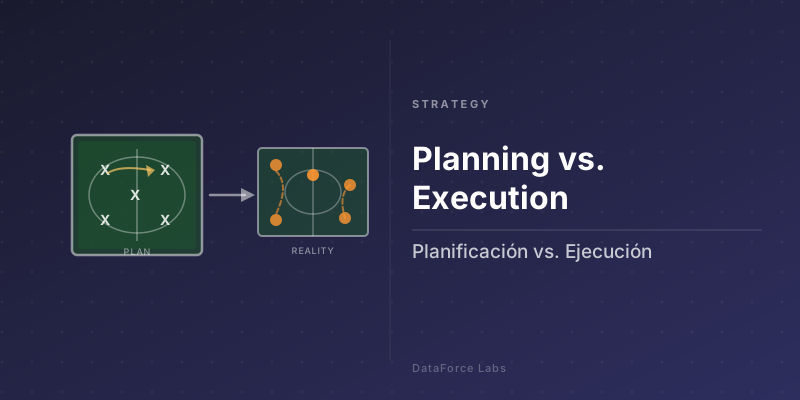
🏆 El partido no se gana en la pizarra
Muchas áreas de planeación en Colombia dedican semanas a construir proyecciones de ventas, inventario o presupuesto con el objetivo de que salgan exactas. Cuando el número no coincide con la realidad, la reacción más común es buscar al culpable, revisar quién calculó mal o qué dato llegó tarde.
El problema no está en que la proyección falle, sino en que el equipo no tiene claro qué hacer cuando eso ocurre.
Un forecast, que es la estimación de lo que va a pasar con ventas, costos o demanda en un período determinado, funciona como la táctica que un técnico de fútbol dibuja en la pizarra antes de cada partido. Define la formación, anticipa el juego contrario y le dice a cada quien dónde estar. Es el mejor plan disponible con la información que hay. Pero el partido no espera que la pizarra tenga razón.
El primer tiempo empieza y las cosas van diferente. El rival cambia el esquema, el jugador clave se lesiona y llueve. El marcador refleja eso, no la táctica inicial. Aquí es donde se diferencia un equipo que sabe jugar de uno que solo sabe planear. El que sabe jugar ajusta en el descanso, mueve piezas y cambia la apuesta. El otro espera que la realidad se acomode al plan.
En muchas empresas colombianas, el equivalente al ajuste de mitad de tiempo nunca llega. El forecast del trimestre se publica en enero y nadie lo toca hasta que termina el ciclo. Mientras tanto, los reportes no cuadran con las órdenes de compra, el área comercial negoció descuentos que nadie registró y el inventario quedó descuadrado. Cada área tiene su propia versión del marcador y nadie sabe cuál es real. Cuando alguien pide explicaciones, el tiempo muerto ya se fue en conciliar números, no en actuar.
La planeación adaptativa, que significa revisar y corregir las proyecciones de forma regular en lugar de tratarlas como un compromiso inamovible, reduce ese tipo de fricciones. IBM Think lo señala en su guía de forecasting: las proyecciones son una guía para la toma de decisiones, no su determinante final. El partido no espera que la pizarra tenga razón, y el plan tampoco puede quedarse quieto cuando el marcador cambia.
La destreza no es adivinar bien el resultado, es saber qué mover cuando se descuadra.
Primero establezca con qué frecuencia el equipo revisará las proyecciones durante el ciclo, no al final. Luego defina quién tiene autoridad para ajustar sin necesitar aprobación de tres niveles. Después cree un espacio breve y regular para contrastar el plan con lo que los datos reales están mostrando. Por último mida la velocidad con que el equipo reacciona al error, no solo qué tan exacto fue el forecast original.
Versión en inglés
🏆 The Match Is Not Won on the Whiteboard
Many planning departments in Colombia spend weeks building projections of sales, inventory, or budget with the goal of getting them exactly right. When the number doesn't match reality, the most common reaction is to find the culprit, review who calculated wrong or what data arrived late.
The problem is not that the projection fails, but that the team doesn't know what to do when that happens.
A forecast, which is the estimation of what will happen with sales, costs, or demand in a certain period, functions like the tactic a football coach draws on the whiteboard before each match. It defines the formation, anticipates the opposing play, and tells each person where to be. It's the best available plan with the information that exists. But the match doesn't wait for the whiteboard to be right.
The first half starts and things go differently. The opponent changes the scheme, the key player gets injured, and it rains. The score reflects that, not the initial tactic. Here's where a team that knows how to play differs from one that only knows how to plan. The one that knows how to play adjusts at halftime, moves pieces, and changes the bet. The other hopes reality adjusts to the plan.
In many Colombian companies, the equivalent of the halftime adjustment never arrives. The quarter's forecast is published in January and no one touches it until the cycle ends. Meanwhile, the reports don't match the purchase orders, the commercial department negotiated discounts that no one recorded, and the inventory became misaligned. Each department has its own version of the score and no one knows which one is real. When someone asks for explanations, the timeout already passed reconciling numbers, not acting.
Adaptive planning, which means reviewing and correcting projections regularly rather than treating them as an immovable commitment, reduces those kinds of friction. IBM Think points it out in its forecasting guide: projections are a guide for decision-making, not its determinant. The match doesn't wait for the whiteboard to be right, and the plan can't stay still when the score changes.
The skill is not guessing the result well, it's knowing what to move when things get misaligned.
First establish with what frequency the team will review projections during the cycle, not at the end. Then define who has authority to adjust without needing approval from three levels. Then create a brief and regular space to contrast the plan with what the real data is showing. Finally measure the speed with which the team reacts to error, not just how accurate the original forecast was.